Deep Eddy is small enough that a single sale can move the monthly median by six figures, and large enough in price range that two buyers with identical budgets will end up in wildly different houses depending on which block they choose. Anyone comparing central Austin neighborhoods on a portal is looking at a number that flattens all of that into one figure.
The interesting question isn't what Deep Eddy's median is this month. It's why the median is the wrong tool for this particular neighborhood, and what to look at instead.
The thesis: Deep Eddy's price band is set by four internal micro-zones and one unresolved lease question next door, not by any citywide trend. Read those, and the portal number becomes noise.
The small-sample problem
Start with the Austin backdrop so the contrast lands. Over the three months ending May 2026, Austin home prices were down 2.3% compared to the same period last year, selling for a median price of $542K, and homes sold after 48 days on the market compared to 49 days last year. That is a metro of tens of thousands of transactions settling into a balanced rhythm.
Deep Eddy is a different kind of animal. The neighborhood has a population of approximately 1,800 residents and around 900 households, tucked between Lake Austin Boulevard, MoPac, and Windsor Road. On the sales side, only a handful of homes trade in any given month. Orchard's tracking has shown Deep Eddy stretches where four homes sold in a 30-day window, and stretches where zero did. When four sales set the median, one waterfront-adjacent trade at $1.6M or one bungalow at $825K reshapes the whole picture.
So the portal number is real, but it is behaving like a stock price on a thinly traded name. It moves for reasons that have nothing to do with the underlying value of the house you're actually looking at. The median sale price generally falls between $1 million and $1.2 million, but single-family home prices typically range from $750,000 to over $2.5 million, depending on the property's size, age, and proximity to the waterfront. That range, not the middle, is where the useful information lives.
The four Deep Eddys
A budget of $1.1 million, roughly the neighborhood's midpoint, buys four different lives depending on where inside these ~900 households you land.
- The Lake Austin Boulevard condo corridor. The southern edge of the neighborhood is where the price floor lives. Attached homes and older condo stock keep the entry point in the $700s and $800s, and they pull the neighborhood's average price per square foot down in ways that make the single-family median look artificially soft.
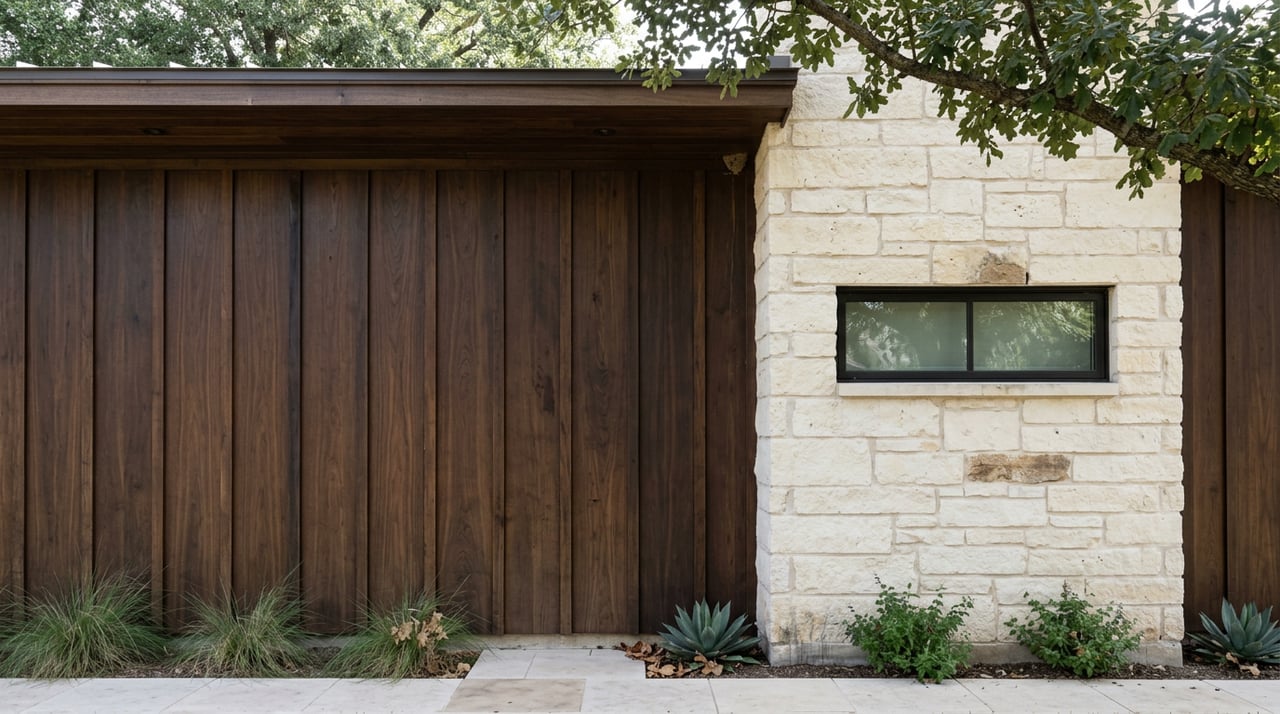
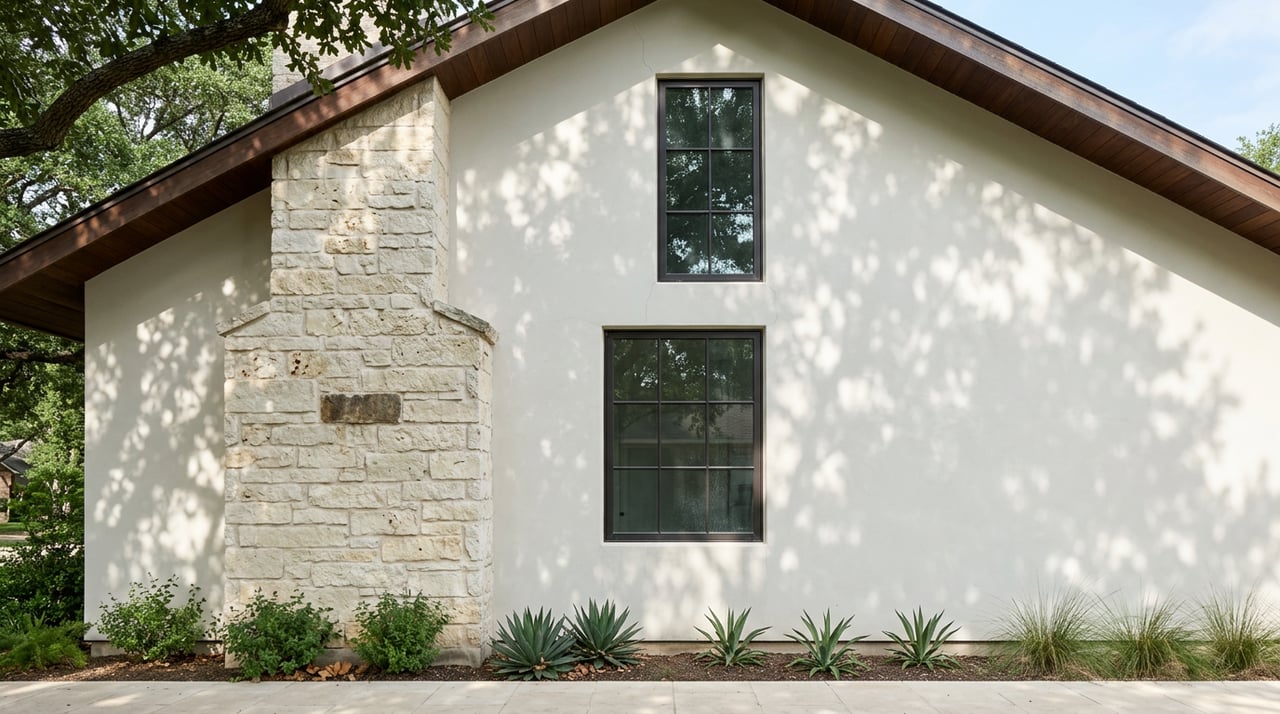
- The Craftsman bungalow interior. Homes in Deep Eddy include a mix of Craftsman bungalows, mid-century ranch-style houses, and modern infill developments. A $1.1M budget on a small early-1900s bungalow, unrenovated, sitting on a modest lot away from the trail is a different purchase than the same number on a renovated ranch closer to Eilers Park.
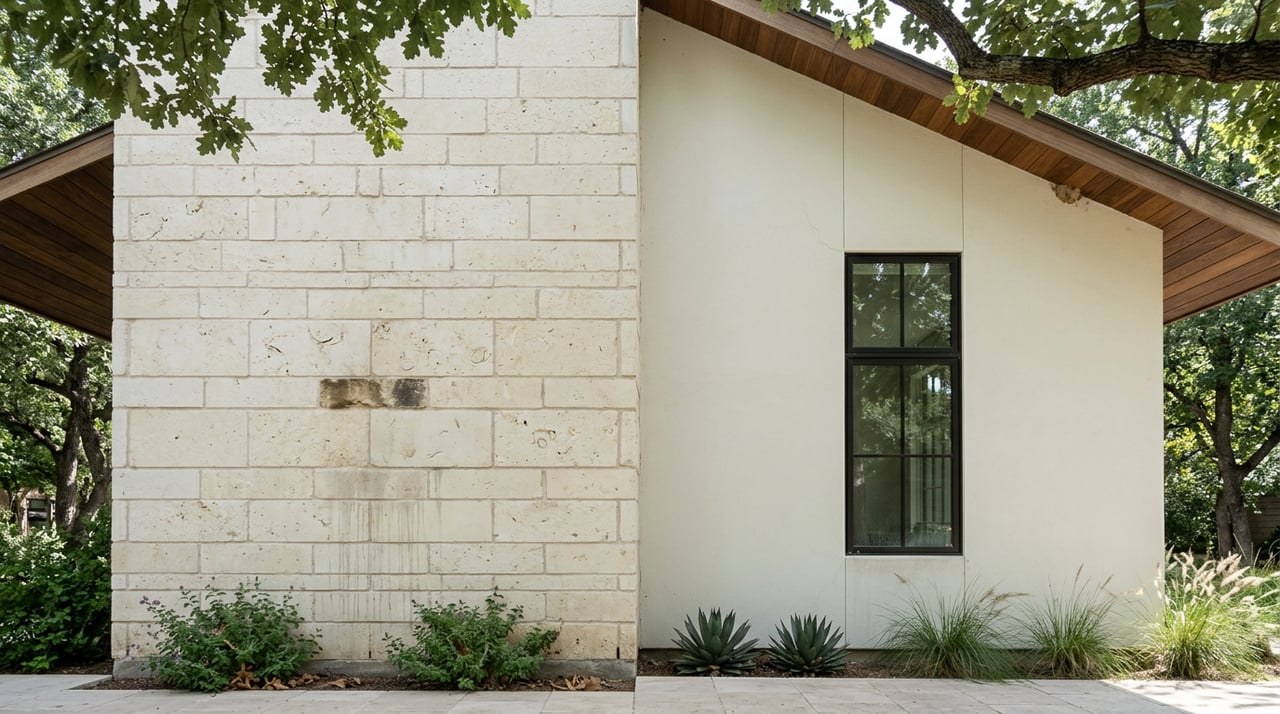
- The renovated mid-century ranch. These are the swing homes. Original footprint, updated kitchen and systems, deep lot, mature canopy. They move fastest and set the tone for what agents think of as "the real Deep Eddy median."
- Modern infill near the trail. New builds and heavy renovations within walking distance of the Hike-and-Bike Trail and Eilers Park corridor push into the $2M–$2.5M+ tier. They aren't outliers. They're a separate submarket that happens to share a zip code.
The same $1.1M shops a completely different neighborhood in each of these zones. That is the interpretation the median cannot give you.
The lease question on the western edge
The largest un-priced variable in Deep Eddy sits just west of the neighborhood at 2901 Enfield Road. Lions Municipal Golf Course, universally called Muny, is a municipal golf course on 141 acres of land the City of Austin leases from the University of Texas since 1937 as part of the greater Brackenridge Tract. What happens to that land matters to every home within walking distance of it.
The short history: the golf course has been subject to ongoing controversy due to the recommended termination of the current term by the University of Texas in 2019. Since then, the site has lived in a series of extensions and preservation fights. The Texas House initially approved HB 2421 to keep "Save Historic Muny District" alive until May 2027. Muny celebrated its 100th anniversary as a national Civil Rights Landmark last year, but rezoning efforts and potential new plans for the land leave the course's future in limbo.
For a buyer on the Deep Eddy side, two scenarios matter, and they cut in opposite directions. If Muny is preserved in its current form, 141 acres of open green space stay put and the western edge of Deep Eddy keeps its quietest boundary. If UT and the city eventually agree to redevelopment, the same edge becomes something else entirely, and the pricing implications for adjacent blocks are meaningful in both directions. Neither outcome is priced into the current inventory because no one knows which one wins.
A seller a few blocks from Enfield and a seller a few blocks from Lake Austin Boulevard are exposed to very different macro risks even though the portal treats them as identical.
What this actually changes at the offer table
The friction shows up in three places once you're actually writing an offer.
Comps are thin, so the appraisal is thin. With sale counts in the low single digits per month, the comparable set for any given Deep Eddy house is often pulled from adjacent Tarrytown or from stale in-neighborhood sales. That is fine when the market is calm, and it becomes an appraisal risk when a bungalow trades for a bungalow price but appraises against a modern infill. Buyers writing near the top of the range should expect appraisal contingency language to matter more here than the metro headline suggests.
Inventory density masks days-on-market. A house sitting for 60 days in Deep Eddy is not the same signal as a house sitting for 60 days in a 30-sale-per-month zip code. With only a handful of buyers cycling through active listings, one week of showings can flip a property from stale to under contract. The Austin metro trend of longer selling times closer to 85 days and months of inventory hovering around 4-6 months is a metro average that does not map cleanly onto ~900 households.
Renovation math depends on the zone, not the neighborhood. A tear-down-to-studs in the bungalow interior is a different investment than in the modern infill pocket, because the exit comps are different. The finish level that reads as "over-improved" in one part of Deep Eddy reads as "on-market standard" three blocks away.
For sellers, the read is the same in reverse. Pricing off "the Deep Eddy median" is pricing off a statistic that does not describe your house. Pricing off the correct sub-cohort, and against a realistic view of what the Muny question does to your western exposure, is closer to the actual mechanic.
The trail, the pool, and the anchor businesses
The lifestyle amenities that sustain demand here are stable in a way that helps interpret the pricing story. Deep Eddy Pool, Texas's oldest swimming pool, remains the neighborhood's cultural anchor. The nearby Hike-and-Bike Trail and Eilers Park pull walkability across the southern edge. Deep Eddy Cabaret at 2315 Lake Austin Boulevard has been in Austin forever since 1951 and is the kind of small business that reliably reappears in every relocation-buyer conversation. None of these are going anywhere.
That stability is why the price floor holds even when the median wobbles. The neighborhood's daily experience does not swing on monthly transaction counts.
FAQ
Is Deep Eddy's median price really $1M to $1.2M or the $1.66M number that sometimes shows on portals?
Both are technically accurate for the windows they measure, and neither is the right tool for pricing a specific house. The typical central tendency sits in the $1M to $1.2M range. Higher monthly figures usually reflect one or two waterfront-adjacent or modern-infill sales moving a small sample.
How much should the Muny situation weigh on a Deep Eddy purchase?
It depends entirely on where in Deep Eddy the house sits. Blocks closest to the Brackenridge Tract carry the most exposure to whatever the city and UT eventually agree to. Blocks closer to Lake Austin Boulevard have effectively zero exposure to Muny and full exposure to trail and lake-corridor dynamics.
Is Deep Eddy a buyer's market right now?
Austin at large is closer to balanced than it has been in years. Deep Eddy is small enough that "market direction" is less useful than "specific house, specific sub-cohort, specific comparable set." The metro tailwinds are real. They apply unevenly at this scale.
If you're weighing Deep Eddy against Tarrytown, Clarksville, or the rest of central Austin and want a read on which sub-cohort actually fits your budget and timeline, Amy Sparks can walk the specific streets with you and pull the comps that match the house rather than the zip code. Book a Personalized Consultation to start the conversation.